

AirWing™ Installations: Proven Wind Propulsion for Vessels
GT Wings presents the first commercially available Jet Sail – a breakthrough in wind-assisted propulsion. AirWing™ installations define a new category of WASP technology that delivers exceptional fuel savings, vessel emission reduction strategies, and compliance benefits across ship retrofitting projects and newbuild applications.
Vectis Progress
Vectis Progress is a 124m general cargo vessel owned by Carisbrooke Shipping and chartered by Fednav.
In 2025, GT Wings successfully installed an AirWing™20 unit on the vessel’s forecastle deck, delivering up to a 10% reduction in fuel consumption and emissions.
- 📍 Shipyard: MMS Shipyard, Hull, UK
- 🌊 Trade Route: Transatlantic
- 🛠️ Installation Date: Q1 2025
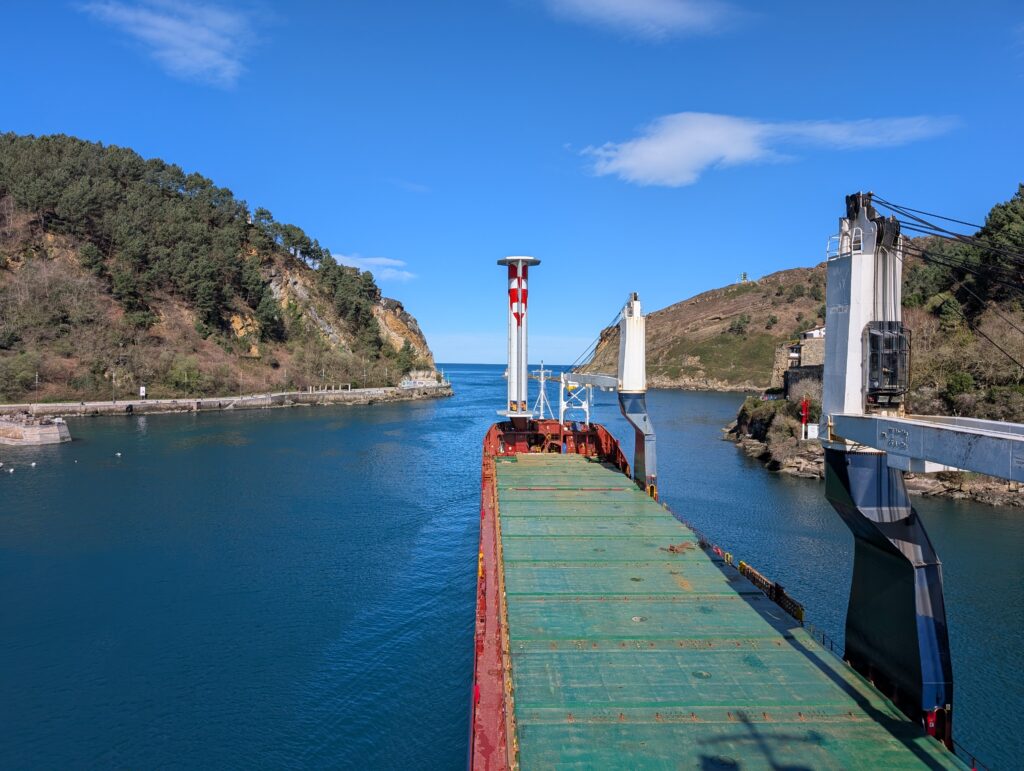

The AirWing™20 harnesses the free, unlimited power of the wind, cutting costs and emissions while seamlessly integrating with vessel operations.

In their words...
“We are proud to be working alongside GT Wings as a project partner with this innovative prototype. Decarbonisation of the marine environment takes centre stage at Carisbrooke Shipping. The installation of our first AirWing will have a significant impact, ensuring that we continue to reduce emissions, cut fuel costs, and stay compliant with new emissions regulations well into the future”
Carisbrooke Shipping | 1st AirWing™ owner | Installed on MV Vectis Progress Q1 2025
Carisbrooke Shipping | 1st AirWing™ Owner (Installation: Q1 2025)
 Watch the Installation Video.
Explore Installation Photos


Partners & Collaborators
Companies Who Trust Us




Partners & Collaborators
Supported by



Frequently Asked Questions (FAQs)
What is an AirWing™ installation on ships?
An AirWing™ installation is when one or more of our Jet Sails are mounted on a ship’s deck. The unit is fixed to a foundation connected to the ship’s structure. Once installed, the AirWing™ runs fully automatically, trimming without crew intervention to provide forward thrust whenever conditions are favourable. The result is a seamless, low-maintenance retrofit or newbuild upgrade that cuts fuel consumption and emissions without changing how the ship is operated.
How does an AirWing™ installation work on cargo vessels?
An AirWing™ installation on a cargo vessel involves mounting the Jet Sail on deck with a secure foundation and linking it to the ship’s power. Once installed, it runs fully automatically, generating thrust when winds are favourable and cutting fuel use without disrupting cargo operations. Due to the high energy density of Jet Sails, they have minimal impact on vessel operations.
Can existing ships be retrofitted with AirWing™ installations?
Yes. Existing ships can be retrofitted with AirWing™ units by installing deck foundations and connecting the AirWing™ to the vessel’s power. The process is straightforward, designed to minimise downtime, and gives older ships a practical route to immediate fuel and emissions savings. For more information, please contact for a free of charge feasibility study.
How much fuel and emissions can AirWing™ installations save?
AirWing™ can reduce fuel use and emissions by 5-30%. However, this depends on factors like vessel type, route, and operating profile. The most reliable way to understand the potential is through a free feasibility study with GT Wings, tailored to your specific vessel.
Is the Jet Sail performance data independently verified?
Lloyd’s Register has verified that GT Wings’ performance assessment methodology aligns with recognised industry standards, confirming that the approach used to isolate and quantify wind-assisted propulsion benefits is technically robust and suitable for in-service performance evaluation.
Are AirWing™ installations compliant with class regulations?
Yes. GT works closely with leading classification societies to ensure every AirWing™ installation is fully compliant and proven safe in all wind and weather conditions at sea.
Which types of ships are suitable for AirWing™ installations?
AirWing™ installations are suitable for a wide range of vessel types, including bulk carriers, tankers, LNG carriers, ro-ro vessels, and container ships. The system can be adapted for both retrofits and newbuilds, making it a flexible solution across most commercial cargo fleets.

Find out how our proven wind propulsion technology can help you reduce emissions and cost.